
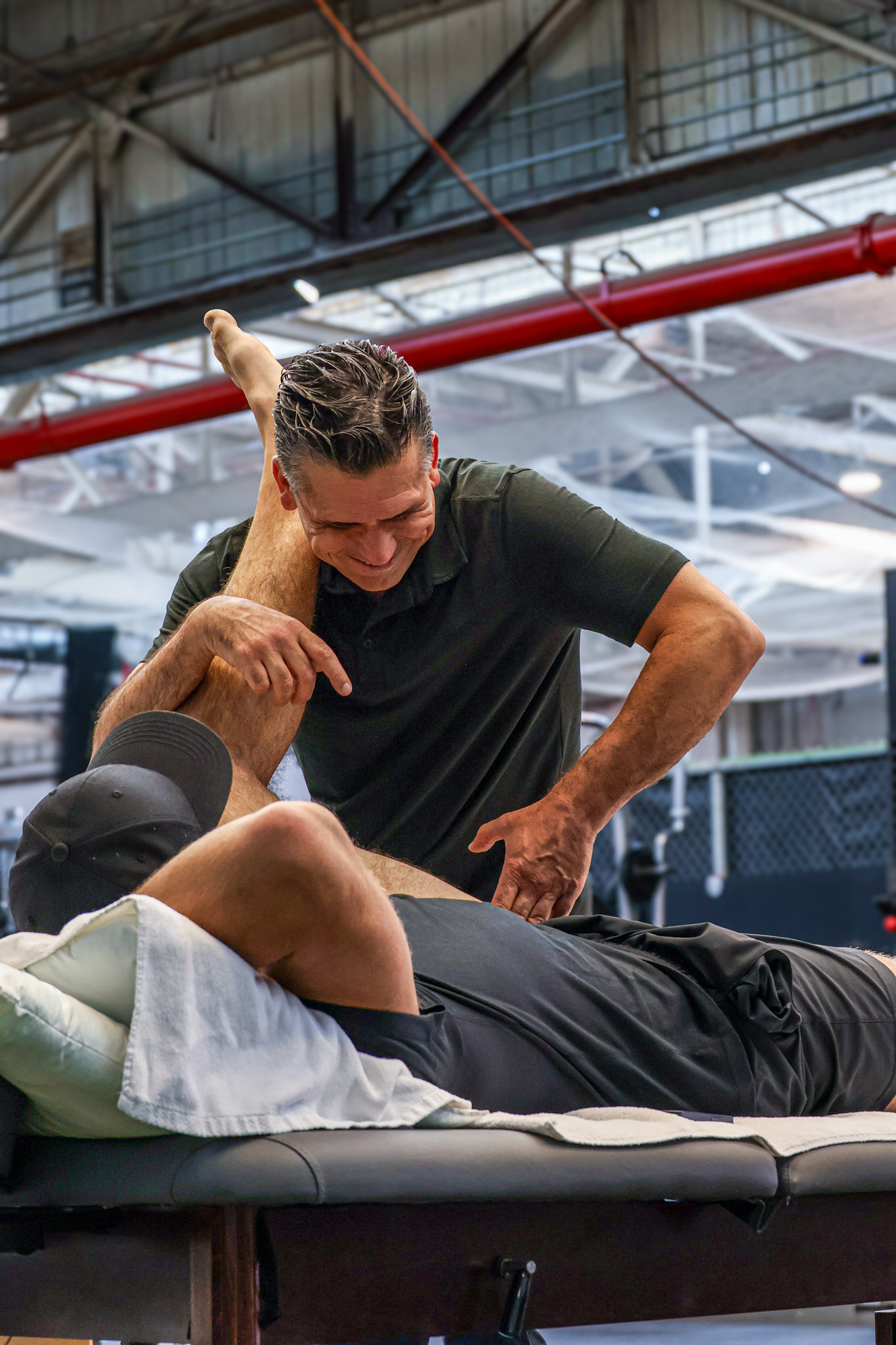
Internal Oblique Tear
The Importance of Pattern Recognition
When you strip our work down to its essence, treating pain and dysfunction isn’t actually about techniques—it’s about recognizing patterns. Techniques come after. The pattern tells you where to start, what to prioritize, and what truly matters in the sea of findings that show up on your table every day.
Pattern recognition has shaped my entire clinical trajectory, and it continues to be the difference-maker in every athlete and patient I treat. I want to walk you through a recent case that illustrates exactly why this skill is so essential—and why so many therapists plateau until they develop it.
The Case That Says It All
A hockey athlete came in two weeks after an acute right internal oblique tear. He felt a sharp pain during a shot follow-through, and internal oblique manual muscle testing immediately reproduced symptoms. But the oblique wasn’t the full story.
When we dug deeper, the real pattern emerged:
Weak right peronei and gluteus medius
Inhibition of right FHL
Decreased right ankle dorsiflexion
Tight psoas & QL
Right rib dysfunction from T8–T10
Global right-sided biomechanical chain dysfunction
If you treat with a symptom-centric mindset, you would spend an hour on the rib—heat, needling, scraping, cupping—and this athlete would keep reinjuring himself because the actual pattern driving the load imbalance would remain unchanged.
Patterns > Problems
Most therapists see a cluster of findings.
High performers see the pattern.
In this case, the pattern was unmistakable:
A right-sided kinetic chain collapse beginning at the ankle, traveling through the hip, and forcing compensation into the trunk. The oblique tear wasn’t an isolated trauma—it was the endpoint of a predictable load-transfer strategy.
Once you see that pattern, the treatment plan becomes obvious:
Improve right ankle dorsiflexion
Restore function to the right peronei, glute medius, tibialis posterior, and FHL
Release the hypertonic psoas and QL
Normalize rib mechanics
This isn’t a “technique recipe”—it’s a hierarchy.
And this is exactly what separates a clinician who produces consistent outcomes.
Why Pattern Recognition Is the Real Clinical Superpower
Pattern recognition collapses complexity. It turns chaos into clarity and transforms you from:
“What should I treat?” → “I know exactly where to start.”
“Everything looks tight/weak.” → “Here’s the primary driver.”
“I hope this works.” → “I know this will change their function today.”
This is the skill that has shaped my career more than anything else.
It’s why high-volume athlete clinics trust systems like Neurofunctional Assessment. It’s why professional athletes return again and again—not because of modality, but because you can see the pattern before they can feel it.
The Reality:
You don’t rise by collecting techniques.
You rise by collecting patterns.
Once you can see them, every case becomes simpler, faster, and more predictable.
More importantly, this is the skill that builds busy clinics, loyal athletes, and therapists who don’t burn out.